

Introduction
The Herasight team is proud to announce NeuroRisk, a novel preimplantation genetic screening service that adds a complementary estimate of an embryo’s risk of autism, schizophrenia, and other psychiatric and neurological conditions caused by rare genetic mutations. NeuroRisk is the first product of its kind to address this source of risk, filling an important gap in what existing genetic screening can detect.
NeuroRisk is available to couples undergoing IVF through Herasight’s embryo screening services. After embryos are created, each can be whole-genome sequenced and assigned a NeuroRisk score. Prospective parents and their clinicians can use these scores, alongside results from other genetic tests, when deciding which embryo to transfer. Selecting an embryo with a lower NeuroRisk score reduces the expected risk of autism, schizophrenia, and other disorders caused by the rare genetic variants this score is designed to detect, without requiring any additional procedures beyond the embryo biopsy already performed in standard IVF.
In this post we explain what these variants are, how they affect brain development, and how screening for them can meaningfully reduce risk for families undergoing IVF. This post summarizes our new study, which shows how strongly these variants are tied to autism, schizophrenia and related conditions.
Table of Contents
Introduction
Autism and Schizophrenia
How NeuroRisk Works
What Our Study Found
NeuroRisk Prediction of Autism and Schizophrenia
How NeuroRisk Complements Existing Screening
Conclusion
Autism and Schizophrenia
Autism and Schizophrenia are conditions that likely arise during brain development, typically appearing in the first years of life in the case of autism, or in early adulthood for schizophrenia. Prevalence estimates vary substantially across countries and years, but are generally each assumed to affect 1-2% of births. There is currently no treatment that reverses the underlying biology of autism, and schizophrenia is a complex disorder to treat, requiring medications that frequently have severe side effects. These conditions impose a substantial lifelong challenge on the affected children and their families.
The causes of autism and schizophrenia are diverse. They can be polygenic or monogenic. Among the monogenic cases, existing carrier screening and standard preimplantation genetic testing can identify known disease-associated genetic variants by checking parents and embryos for them.
But for a substantial fraction of autism and schizophrenia cases, no clear genetic cause is ever found. Families receive a clinical diagnosis with no underlying explanation. Recent large-scale genomic research has begun to explain why. Rare variants that damage protein function in important genes have been shown to substantially increase the risk of autism, schizophrenia, and many other disorders, as we found in our recent paper. It is likely that each variant contributes a moderate amount of risk, and the risk accumulates as several of these variants occur together.
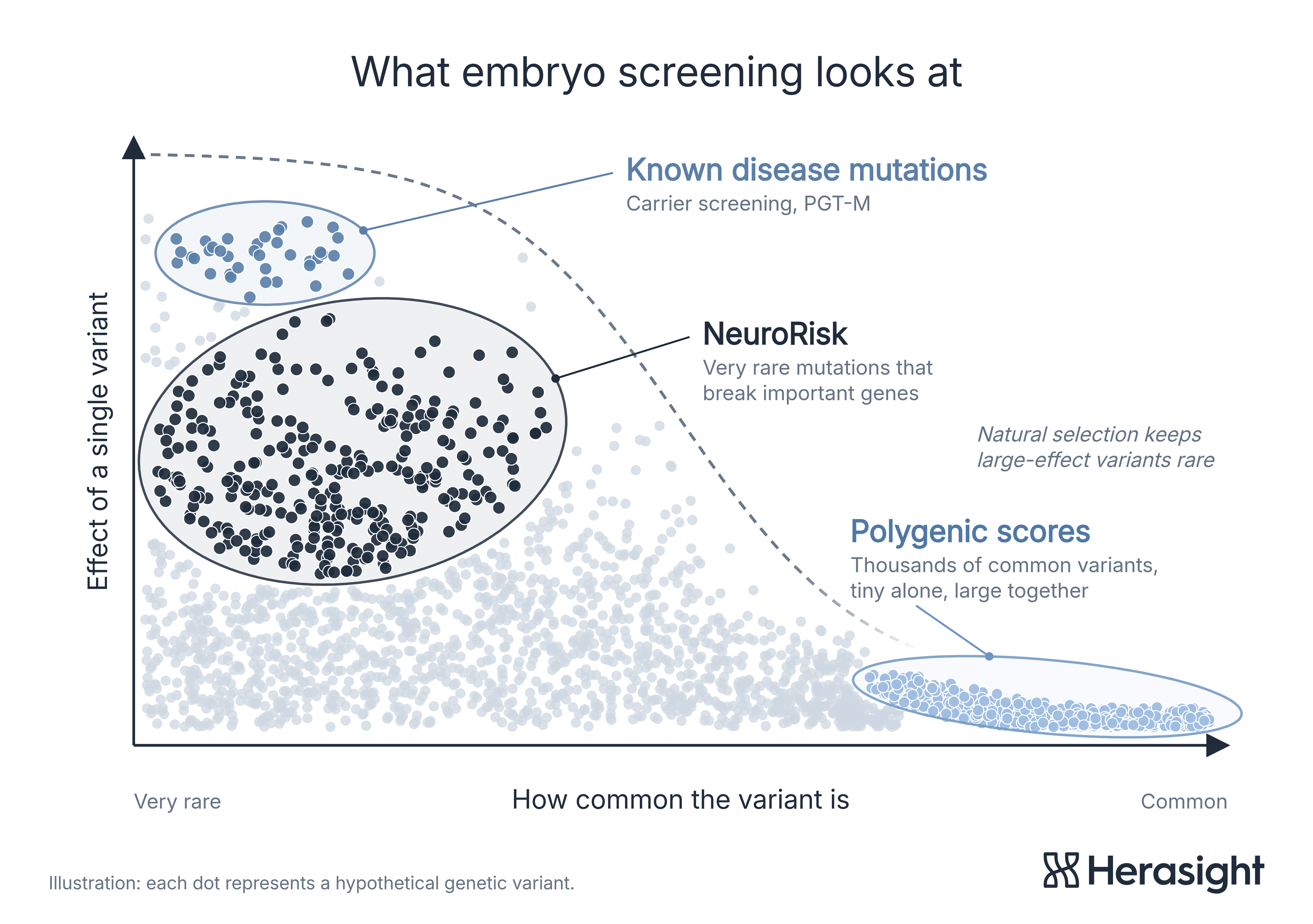
These variants are not captured by any existing embryo screening test. They are too rare to be captured by polygenic risk scores which look at variants that are common in the population. They are also not all captured as single-gene disease mutations, so carrier screening cannot detect them either. NeuroRisk is the first preimplantation genetic screening service designed to directly measure the cumulative effect of rare variants, or exome-wide rare variant genetic load.
How NeuroRisk Works
The score is built on a well-established principle in human genetics. The roughly 20,000 protein-coding genes in the human genome differ enormously in their biological and evolutionary importance. Some encode proteins that are essential to development and survival, and even a single broken copy can cause serious health problems.
We can tell which genes are essential by examining their patterns of variation across the human population. For each gene, we can calculate how many damaging mutations would be expected by chance, and compare that to how many appear in a large sample of healthy people. For some genes, the observed number of mutations is lower than expected, which suggests that natural selection has purged these mutations from the gene pool. When damaging mutations arise in these essential genes, they tend to harm the carrier’s health and reproductive fitness, and so are gradually filtered out of the population over many generations. This is a form of purifying selection. Geneticists call the resulting pattern “evolutionary constraint,” and the most essential genes are the most strongly constrained, as quantified by a gene’s selection coefficient against highly damaging (loss of function, or LOF) variants.
Large genomic datasets allow us to measure the degree of evolutionary constraint for every gene in the human genome (Karczewski et al., 2020). One piece of evidence that mutations to constrained genes tend to be harmful is that, on average, carriers of these mutations have fewer children than people who do not carry them (Gardner et al., 2022).
What Our Study Found
We validated this approach against brain-related outcomes in two large population datasets: about 3,500 children from the Adolescent Brain Cognitive Development (ABCD) Study and about 300,000 adults from the All of Us Research Program. Nearly all prior work on these variants uses ascertained samples, i.e. autism and schizophrenia clinic cohorts or families recruited through an affected child. Ascertainment is what makes those designs good at finding genes, and it also inflates penetrance, so their estimates don’t carry over to an embryo of a typical IVF couple. All of Us (AoU) and ABCD are both population cohorts. Per participant we summed the selection coefficients (sHet) across all genes with a qualifying LOF variant, scoring damaging missense separately; the paper calls this sum genetic load.
In AoU, 12% of adults had at least one LOF variant in a gene with sHet > 0.1, our cutoff for “constrained”. The sibling pairs put the inherited share at about 93%. Recorded diagnoses, carriers vs non-carriers: intellectual disability (ID) 0.45% vs 0.14%, schizophrenia 2.1 vs 1.1%, autism 2.3 vs 1.4%. In ABCD, a LOF in a typical constrained gene went with cognitive scores ~3.5 points lower on the IQ scale, and its autism association was stronger in these children than in the AoU adults.
The effect climbs steeply with sHet (Fig. 1). ABCD children whose worst LOF hit a gene with sHet > 0.4 averaged 96, against 107 for children with no such variant. In AoU, 1.3% of adults carrying one had an ID diagnosis, roughly 9x the non-carrier rate, and that’s with severe ID mostly absent, since AoU only enrolls adults who can consent for themselves.
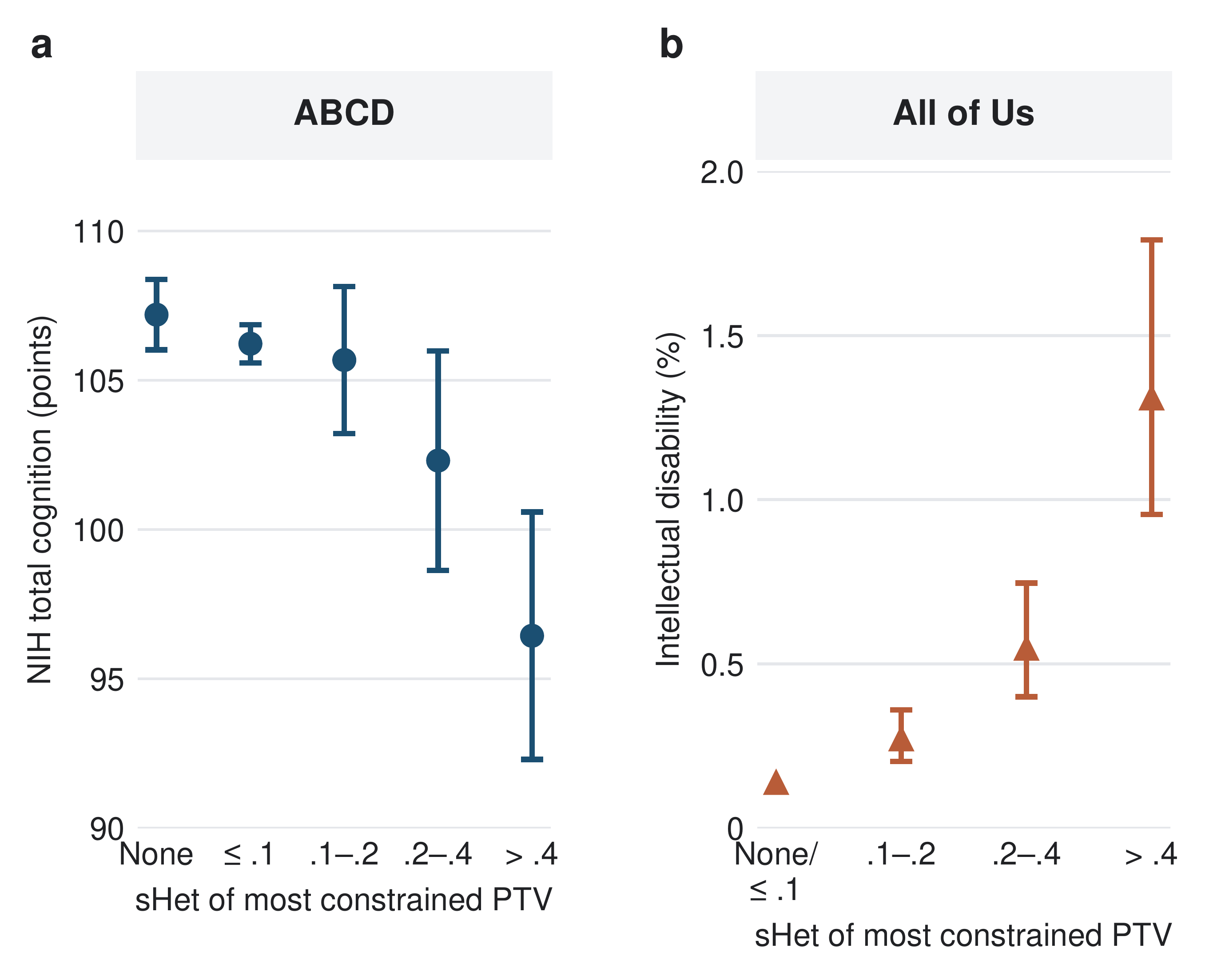
Figure 1. Cognitive test scores of children in the ABCD Study (left) and recorded intellectual disability among adults in All of Us (right), by the selection coefficient (sHet) of the gene carrying a person’s most damaging LOF variant.
Figure 2 (below) extends this to psychiatric diagnoses recorded in All of Us. In the top panel, each bar is the odds ratio for one additional damaging variant in a typical constrained gene. LOF variants consistently had larger effects than damaging missense variants, and the biggest effects were for diagnoses that involve intellectual impairment: an odds ratio of 2.34 for autism with intellectual disability and 2.02 for intellectual disability, against 1.31 for autism without it. The bottom panel groups carriers by the constraint of the affected gene. Every condition was most common in carriers whose variant fell in one of the most constrained genes, with the steepest climb for intellectual disability and schizophrenia, and people with two such variants were at higher risk than people with one.
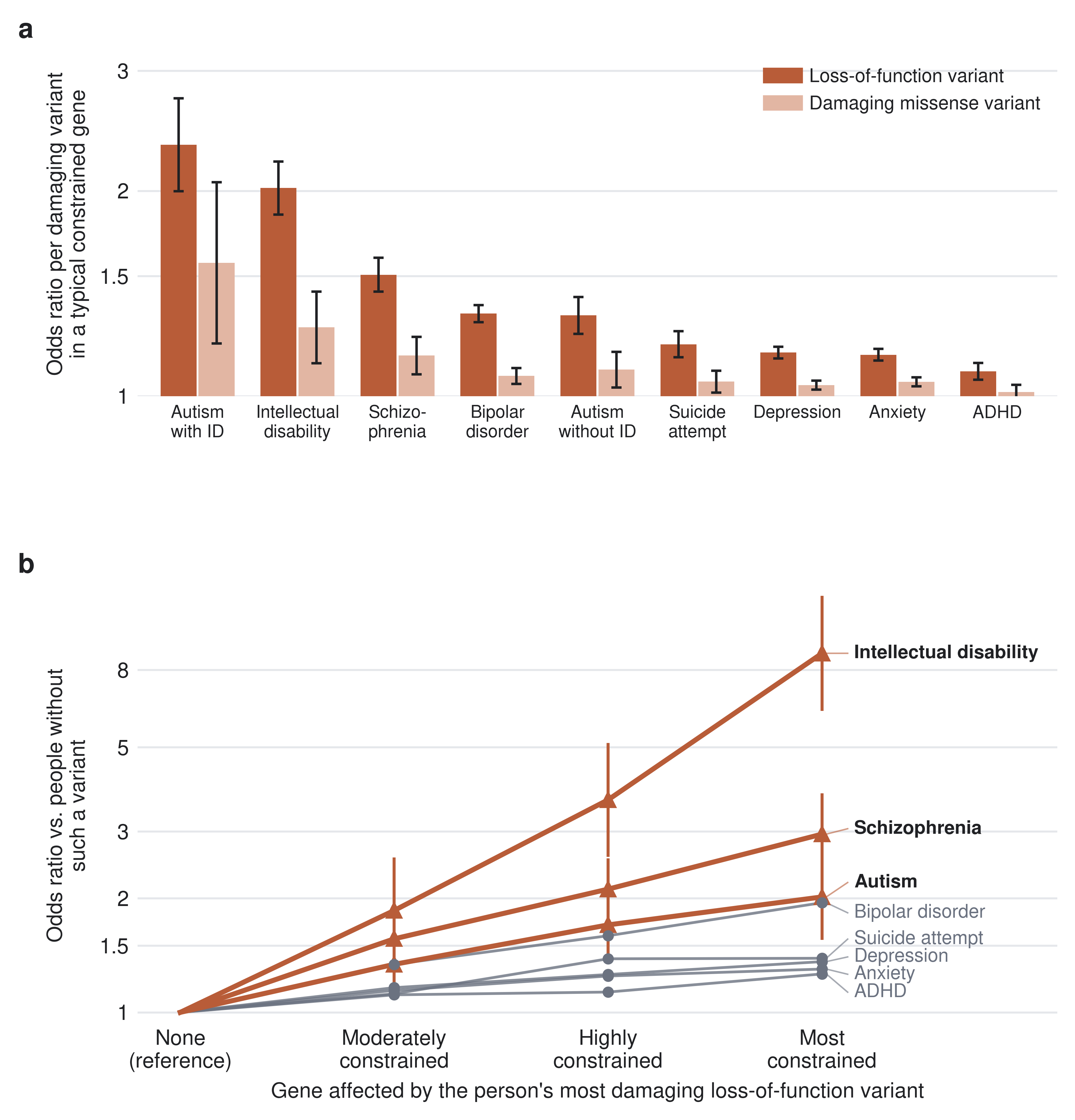
Figure 2. Odds ratios for nine conditions among adults in All of Us, per damaging variant in a typical constrained gene (top) and by how constrained the affected gene is (bottom).
Looked at from the other direction, carriers are overrepresented among people who have these conditions. They made up 12% of All of Us overall, but 31% of adults with a recorded intellectual disability, 20% of those with schizophrenia and 17% of those with autism. We also checked how much of this excess comes from genes that are already on the standard lists of developmental-disorder, autism and schizophrenia genes (DDG2P, SFARI and SCHEMA). Only about half of it does, while the rest comes from constrained genes that are not on these lists.
Genetic load and polygenic scores turned out to be almost completely unrelated. The correlation between the two was close to zero for every condition we looked at, and adding a person’s polygenic score to the model changed the rare-variant estimates by at most 2%.
The two add up, as Figure 3 shows: schizophrenia risk was highest in carriers who also had a high polygenic score for schizophrenia, and the risk of intellectual disability was highest in carriers with a low polygenic score for cognitive ability. For embryo screening, this means NeuroRisk adds information that polygenic scores cannot provide.
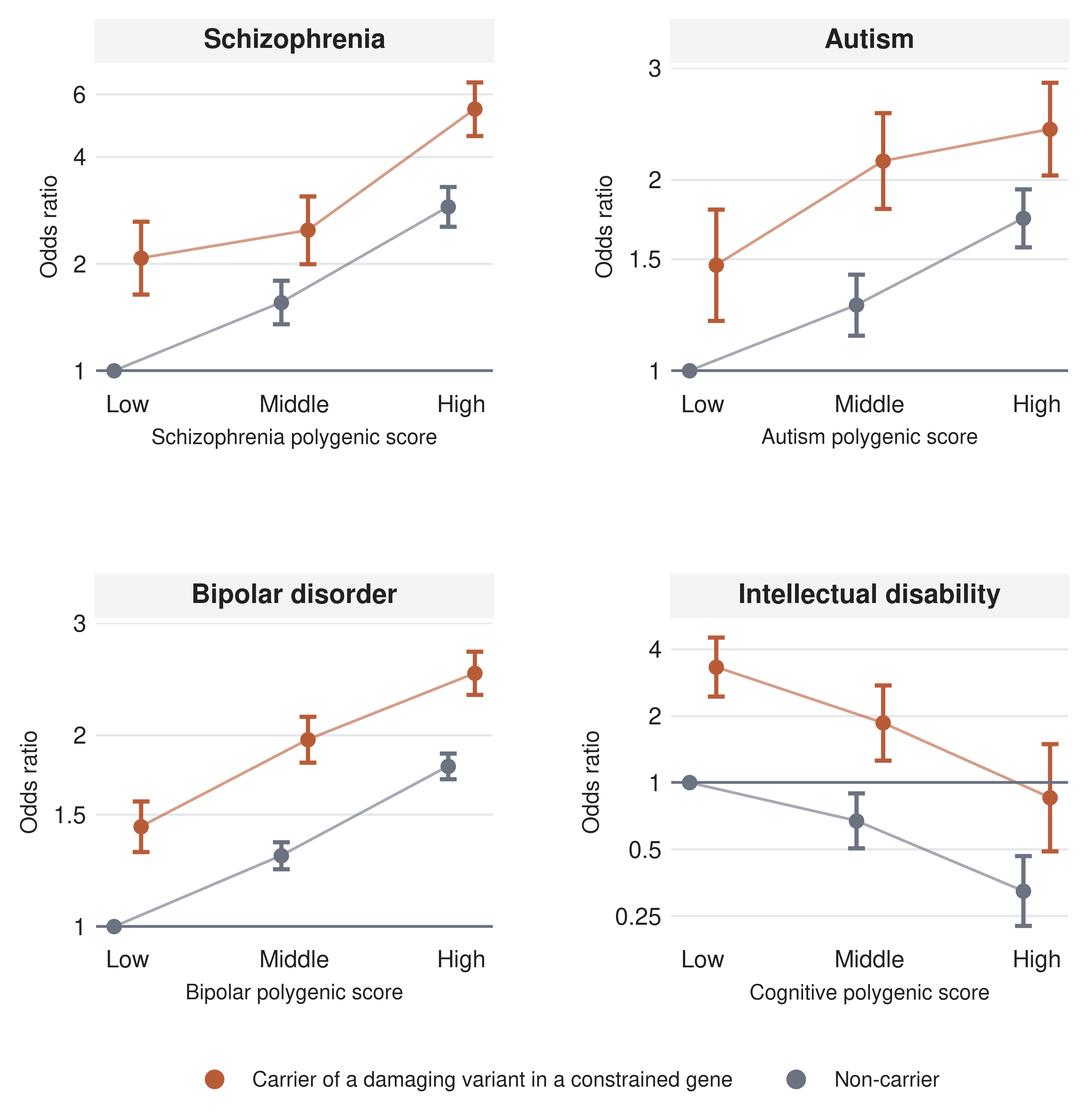
Figure 3. Risk of schizophrenia, autism, bipolar disorder and intellectual disability among adults in All of Us, for carriers and non-carriers of a LOF variant in a constrained gene, by polygenic score.
Two further results matter for embryo screening. First, the effects carry over across ancestries. In participants of African ancestry, the association with intellectual disability was not significantly worse than in participants of European ancestry, and the autism association was similar in all five ancestry groups we could test. Rare variants are read directly from the DNA rather than inferred from nearby common SNPs, which is one reason they are portable across ancestries. Second, the pattern holds within families. As we have argued before, comparisons between siblings are the relevant frame for embryo screening, since embryos from the same parents are, genetically speaking, siblings. Among sibling pairs in All of Us, the sibling with the higher genetic load was more likely to have autism, schizophrenia or bipolar disorder, although with about 4,000 sibling pairs these estimates are still imprecise.
NeuroRisk Prediction of Autism and Schizophrenia
NeuroRisk takes the genetic load that our study measures and applies it to embryos. NeuroRisk is constructed in three steps. The first step identifies the relevant variants. We sequence the embryo and scan the embryo’s protein-coding DNA for mutations that are predicted to damage protein function. To do this, we use the parents’ genomes to determine which of their rare variants each embryo inherited. More specifically, we look at codons, the three-letter units of DNA that each specify either the next amino acid in a protein or the signal to stop building it. When a mutation occurs to one of these codons, we can predict with reasonable accuracy whether the resulting protein will still function.
The two main kinds of damaging mutations are loss-of-function variants and missense variants. A loss-of-function variant introduces a stop codon prematurely, so the protein cannot do its job properly. A damaging missense variant alters a codon in a way that leads it to insert a different amino acid than it is supposed to, which disrupts the protein’s structure or activity. Both may render the encoded gene effectively non-functional or change its function, and both are what NeuroRisk is designed to detect.
Because NeuroRisk is built from rare variants that might even be limited to a single family, it cannot be captured by the genotyping-array-based approaches used by other companies in the PGT-P space, which only look at a few hundred thousand variants that vary frequently between individuals. Even embryo whole-genome sequencing might not capture such variants well due to the technical challenges of working with the 3-7 cells an embryo biopsy usually provides. In contrast, high-quality sequencing of embryos combined with extensive short- and long-read sequencing of both parents, as we do with our ImputePGTA algorithm, is the best way to call such variants.
The second step weighs each variant by how constrained the gene it falls in is, and how relevant that gene is for brain development. The third step combines the first two steps into a single score from 0 to 100. A higher score reflects a greater cumulative burden of damaging variants in important genes, and therefore a higher expected risk of severe NDDs. The score can be compared across embryos, so a couple’s IVF cohort can be ranked from lowest to highest expected risk before any embryo is transferred.
Figure 4 shows roughly what this means for the risk of autism and schizophrenia across the range of the score.
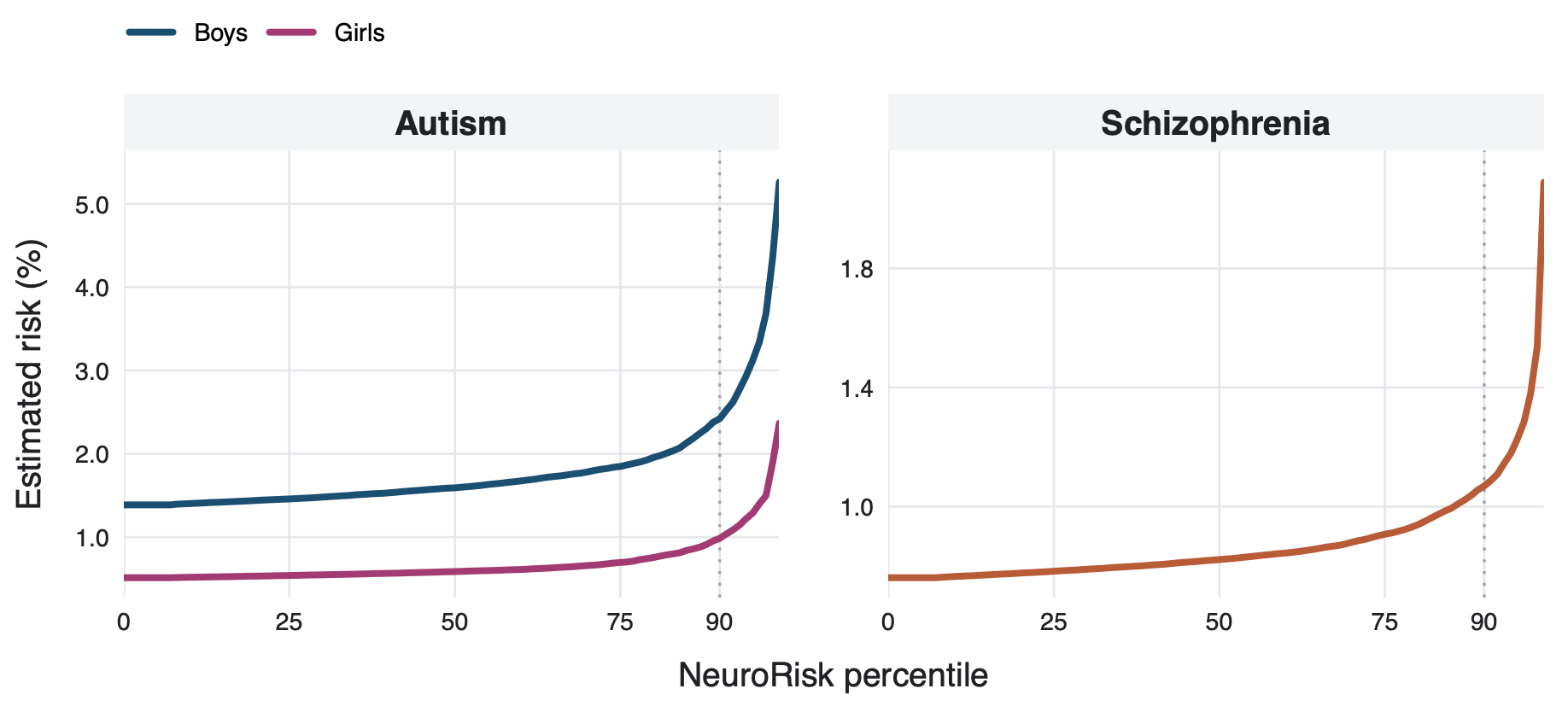
Figure 4. Estimated risk of autism and schizophrenia by NeuroRisk percentile. The score is highly right-skewed, with approximately 10% of individuals carrying significantly above-average burden in constrained genes. Autism risk is shown separately for boys and girls, assuming the usual ratio of three boys to one girl among autism diagnoses, while schizophrenia risk is scaled to a population risk of 0.9%.
The NeuroRisk distribution in the population is highly right-skewed. Most people have very low scores. Approximately 10% carry a meaningful genetic load of damaging variants in constrained genes, which roughly corresponds with the carriers in our study (9% of ABCD children and 12% of All of Us adults). A NeuroRisk percentile tells prospective parents how a given embryo compares to the general population. Scores at or above the 90th percentile mark the point at which risk rises meaningfully above baseline. In our study, children who carried such a variant scored about 3.5 IQ points lower than children with no detected damaging variants, and adult carriers had about 1.6 times the autism rate of non-carriers, with a stronger association in children. These results are consistent with earlier work on mild intellectual disability (Urpa et al., 2024), and increased risk across a range of neuropsychiatric conditions, including schizophrenia (Liu et al., 2023), bipolar disorder (Palmer et al., 2022), epilepsy (Epi4K Consortium, 2017), ADHD (Rajagopal et al., 2022), autism (Antaki et al., 2022), and antisocial personality disorder (Musalkova et al., 2024).
The class of severe neurodevelopmental disorders (NDDs) that NeuroRisk targets, those for which no specific causal mutation has been identified, occurs in approximately 0.5 to 1% of births. Rare inherited damaging variants in constrained genes account for an estimated 10 to 20% of these cases (Samocha et al., 2024). In our study, carrying such a variant accounted for an estimated 21% of intellectual disability, 9% of schizophrenia and 6 to 13% of autism. That is less than the share of carriers among cases (31%, 20% and 17% in All of Us), because some carriers would have developed the condition anyway. By selecting against high-NeuroRisk embryos in IVF, a couple can lower the chance of a severe NDD.
Because most of these variants are inherited, each embryo receives a different set of them. With 12% of adults carrying at least one, roughly one in four couples includes a carrier. If a parent carries a damaging variant in a constrained gene, each embryo has a 50% chance of inheriting it, and with five embryos the chance that at least one is free of it is about 97%.
Damaging variants in constrained genes raise the risk of autism and schizophrenia, but they are also associated with reduced cognitive performance, as in our ABCD data, and with lower educational attainment, and reduced reproductive success in adulthood (Gardner et al., 2022). This reflects the fact that the genes contributing to NeuroRisk are important for many aspects of growth and development.
How NeuroRisk Complements Existing Screening
Genetic risk in embryos can come in many forms, from monogenic and polygenic risks to chromosomal abnormalities and genetic variants associated with NDDs. Different tests address different kinds of risk, which is why we offer all of these tests as part of a comprehensive package to parents doing IVF.
For example, carrier screening looks for known genetic variants that cause diseases like cystic fibrosis, sickle cell, and Tay-Sachs. Carrier screening is important for ruling out these well-characterized recessive risks, but it has two important limits. It only finds variants that have already been catalogued as disease-causing, and it cannot detect the rare inherited variants that NeuroRisk targets.
By contrast, NeuroRisk looks for damaging mutations in constrained genes each of which adds its own risk. These mutations are spread across thousands of constrained genes rather than concentrated in a small list of known disease-causing genes, and they are individually rare enough that any given couple is unlikely to share the same one. The NeuroRisk score is determined by the cumulative burden of damaging variants across the embryo’s genome.
To sum up the distinction between the main kinds of genetic tests we offer, carrier screening finds specific genes known to cause disease. Polygenic scores sum up large numbers of genetic variants that jointly raise or lower the risk of common diseases like diabetes or colon cancer. NeuroRisk targets rare inherited variants that can cause neurodevelopmental disorders like autism and intellectual disability. Each test can provide parents with important information, and together they offer a more complete picture of an embryo’s genetic risk.
Conclusion
NeuroRisk addresses a source of genetic risk that has been understood for several years but has not, until now, been translated into a useful test with clinical utility. For families undergoing IVF, NeuroRisk offers information that allows couples to reduce the risk of neurodevelopmental disorders such as severe autism and intellectual disability.
Carrier screening can find some monogenic diseases that have complete penetrance, where the presence of the gene guarantees the disease will occur. But most diseases and most genetic predictors are not like this. For example, the well-known BRCA variants associated with breast and ovarian cancer raise the risk of these diseases materializing; they do not guarantee their carrier will get cancer. Polygenic prediction looks for many more variants, each of which contributes to a propensity to develop a complex disease. In the same way, NeuroRisk identifies mutations in evolutionarily constrained genes that are associated with normal neurological development. In doing so, selecting against embryos with a high NeuroRisk score can reduce the risk of severe neurodevelopmental disorders.
The Herasight team is proud to unveil this new genetic test, and we are happy to answer any questions physicians and patients wish to ask about it.
If you are undergoing IVF or working with patients who are, visit herasight.com to learn more, or speak with your clinic about adding NeuroRisk to your screening panel. Subscribe to our newsletter for more updates.
References
Agarwal, I., Fuller, Z. L., Myers, S. R., & Przeworski, M. (2023). Relating pathogenic loss-of-function mutations in humans to their evolutionary fitness costs. eLife, 12, e83172. https://doi.org/10.7554/eLife.83172
Ahangari, M., Moore, S., Schleede, J., Young, A. S., & Wolfram, T. (2026). Exome-wide rare variant genetic load is associated with cognition, intellectual disability and psychiatric disorders in population-based cohorts. Preprint. https://herasight.com/papers/neurorisk.pdf
Antaki, D., Guevara, J., Maihofer, A. X., et al. (2022). A phenotypic spectrum of autism is attributable to the combined effects of rare variants, polygenic risk and sex. Nature Genetics, 54(9), 1284–1292. https://doi.org/10.1038/s41588-022-01064-5
Epi4K Consortium & Epilepsy Phenome/Genome Project. (2017). Ultra-rare genetic variation in common epilepsies: A case-control sequencing study. The Lancet Neurology, 16(2), 135–143. https://doi.org/10.1016/S1474-4422(16)30359-3
Gardner, E. J., Neville, M. D. C., Samocha, K. E., et al. (2022). Reduced reproductive success is associated with selective constraint on human genes. Nature, 603(7903), 858–863. https://doi.org/10.1038/s41586-022-04549-9
Karczewski, K. J., Francioli, L. C., Tiao, G., et al. (2020). The mutational constraint spectrum quantified from variation in 141,456 humans. Nature, 581(7809), 434–443. https://doi.org/10.1038/s41586-020-2308-7
Liu, D., Meyer, D., Fennessy, B., et al. (2023). Schizophrenia risk conferred by rare protein-truncating variants is conserved across diverse human populations. Nature Genetics, 55(3), 369–376. https://doi.org/10.1038/s41588-023-01305-1
Martin, H. C., Jones, W. D., McIntyre, R., et al. (2018). Quantifying the contribution of recessive coding variation to developmental disorders. Science, 362(6419), 1161–1164. https://doi.org/10.1126/science.aar6731
Musalkova, D., Pristoupilova, A., Jedlickova, I., et al. (2024). Increased burden of rare protein-truncating variants in constrained, brain-specific and synaptic genes in extremely impulsively violent males with antisocial personality disorder. Genes, Brain and Behavior, 23(1), e12882. https://doi.org/10.1111/gbb.12882
Palmer, D. S., Howrigan, D. P., Chapman, S. B., et al. (2022). Exome sequencing in bipolar disorder identifies AKAP11 as a risk gene shared with schizophrenia. Nature Genetics, 54(5), 541–547. https://doi.org/10.1038/s41588-022-01034-x
Rajagopal, V. M., Duan, J., Vilar-Ribo, L., et al. (2022). Differences in the genetic architecture of common and rare variants in childhood, persistent and late-diagnosed attention-deficit hyperactivity disorder. Nature Genetics, 54(8), 1117–1124. https://doi.org/10.1038/s41588-022-01143-7
Samocha, K. E., Chundru, V. K., Fu, J. M., et al. (2024). Substantial role of rare inherited variation in individuals with developmental disorders. medRxiv. https://doi.org/10.1101/2024.08.28.24312746
Urpa, L., Kurki, M. I., Rahikkala, E., et al. (2024). Evidence for the additivity of rare and common variant burden throughout the spectrum of intellectual disability. European Journal of Human Genetics, 32(5), 576–583. https://doi.org/10.1038/s41431-024-01581-3
Very cool! Are you planning to extend this to de novo mutations including de novo CNVs (like microdeletions & microduplications)? I believe these would be the largest source of autism risk for many families using your service, since the parents themselves are high functioning & unlikely to carry ID/severe autism variants themselves?